Now that the Ontario Superior Court has ruled that two key provisions of Mississauga’s Nuisance Weed and Tall Grass Control bylaw are unconstitutional, what are the implications for naturalized and native plant gardens?
In the Ruck v. City of Mississauga decision, released on January 6, 2026, Justice Doi struck down the bylaw’s 20cm limit on the height of “grass” and the prohibition against “nuisance weeds and weed seeds”—two provisions that anchor Mississauga’s regulation of residential yards and gardens, and that, indeed, can be found in bylaws across the country.
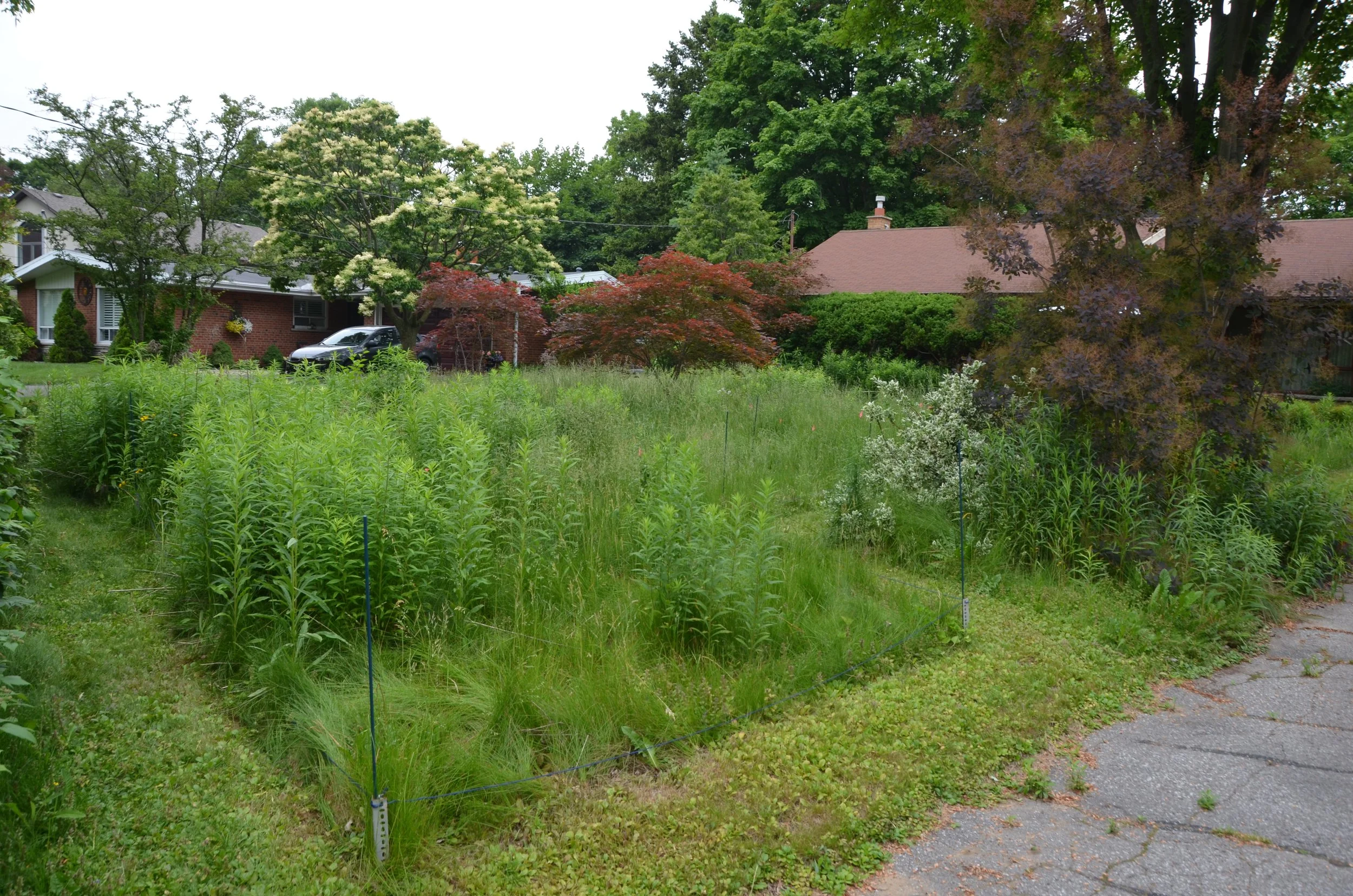
Wolf’s naturalized front yard in June 2023, prior to the City mowing it down. (Photo by Lorraine Johnson)
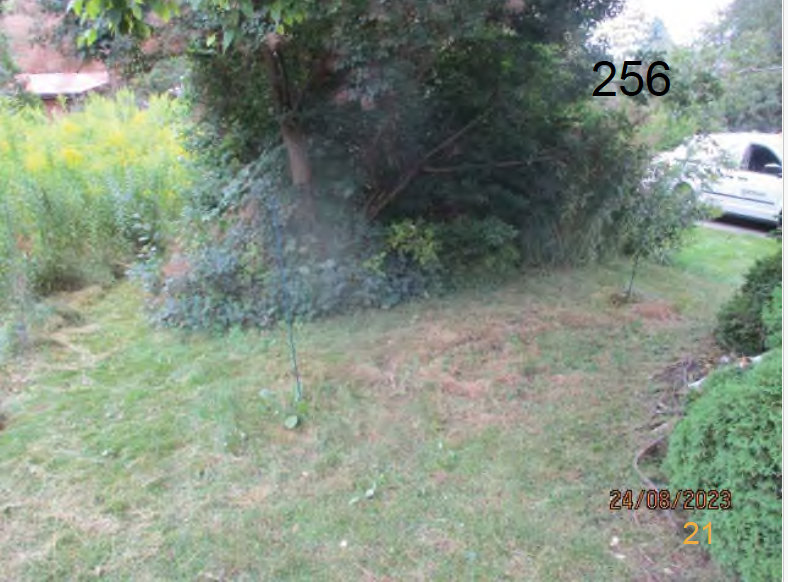
After the City mowed it down in August 2023. (Photo submitted as evidence to the Court)
Not surprisingly, there’s a lot of concern that it might now be illegal for municipalities to require that lawns be mowed and “weeds” be removed. When put this way, it does indeed sound radical. (Cue the outrage about activist judges running roughshod over the intentions of elected politicians. Throw in some populist muttering over the damage to “community standards” and neighbourhood aesthetics. And consider those who worry that one of the tools for regulating plants that pose a health/safety risk to humans and/or the environment is now gone.)
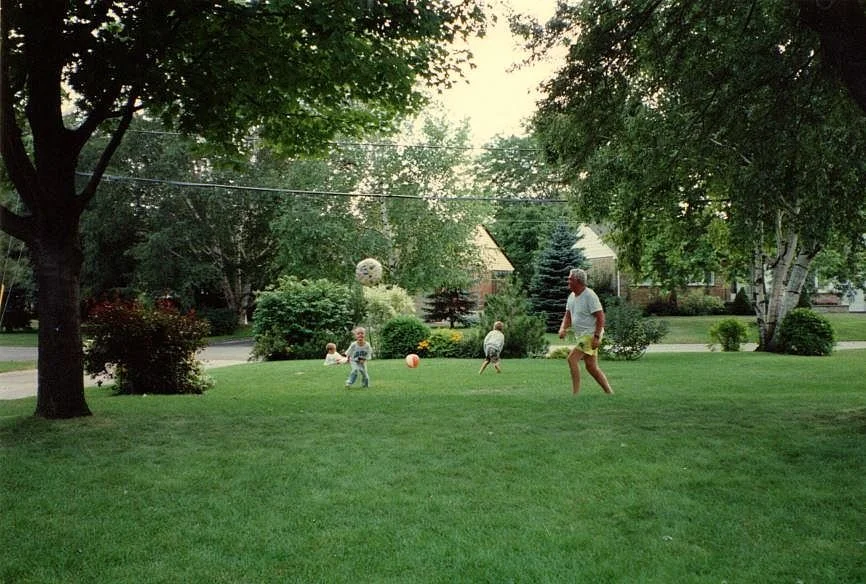
Wolf’s yard in 1995, years before he began his naturalization project. (Photo courtesy of Wolf Ruck)
When framed this way, the Court decision does indeed sound radical.
But it’s not. What the Court mainly and essentially did in the Ruck v City of Mississauga ruling is to affirm a 30-year old decision from an earlier court case over a naturalized garden. The 1996 decision in the Sandy Bell case affirmed the Charter-protected right to a naturalized garden. In both the Bell and now the Ruck case, the Judges didn’t say that this right is absolute, but rather, that any infringement of that right must stand up to evidence-based tests under Section 1 of the Canadian Charter of Rights and Freedoms. For example, is the infringement minimally impairing of the right? Is the infringement proportionate? In the Ruck case, the City didn’t provide any compelling evidence.
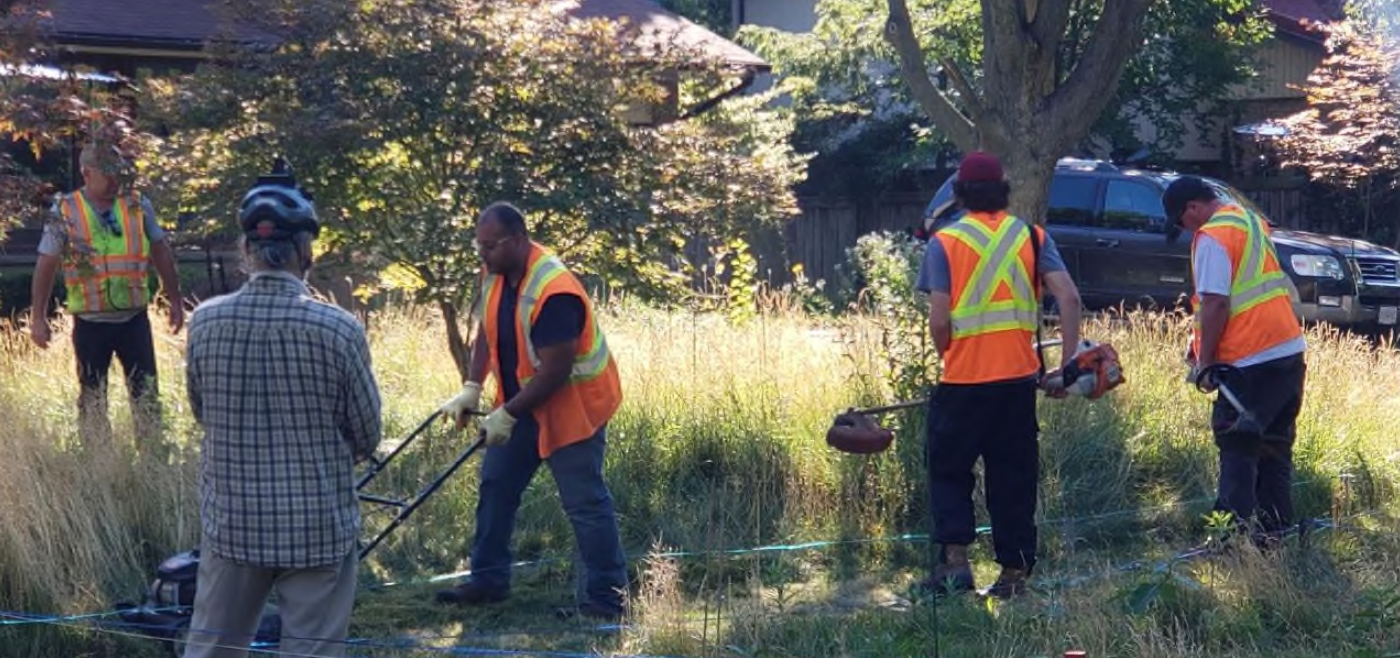
Contractors hired by the City of Mississauga to mow down “tall grass and weeds” in Wolf’s naturalized yard. (Photo courtesy of Wolf Ruck)
It’s easy enough to imagine evidence-based health and safety restrictions that could be justified—restrictions based on sightlines, for example.
But consider the blanket prohibitions in Mississauga’s bylaw. No “grass”—that is, any of the 12,000+ species of graminoids—over 20cm. What about all the native grasses, most of which grow taller than that and have obvious public benefits for the pollinators and birds they support? Not allowed to grow above 20cm in Mississauga even if they don’t obstruct sightlines.
Or consider Mississauga’s prohibition against any “nuisance weed seeds.” Good luck enforcing that.
Or what about Mississauga’s list of prohibited “nuisance weeds”? They’re all plants listed as Noxious Weeds under the provincial Weed Control Act, even though the Act states explicitly that the list applies only to agricultural and horticultural production areas. A number of the plants on the list, while they may cause urban gardeners to complain, do not pose any meaningful threat in cities—certainly, it could be argued, not enough of an ecological threat to justify an infringement of Charter-protected expression.
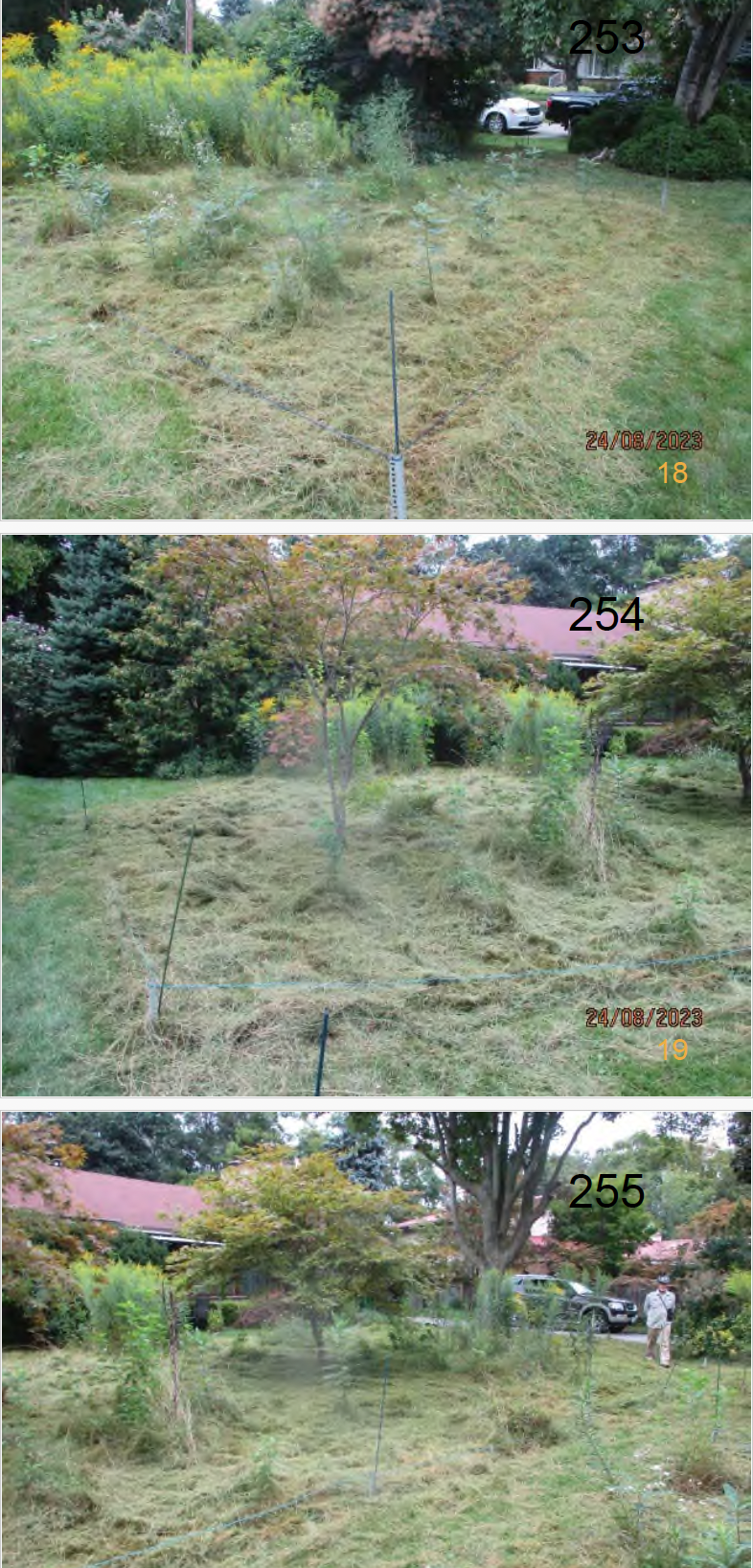
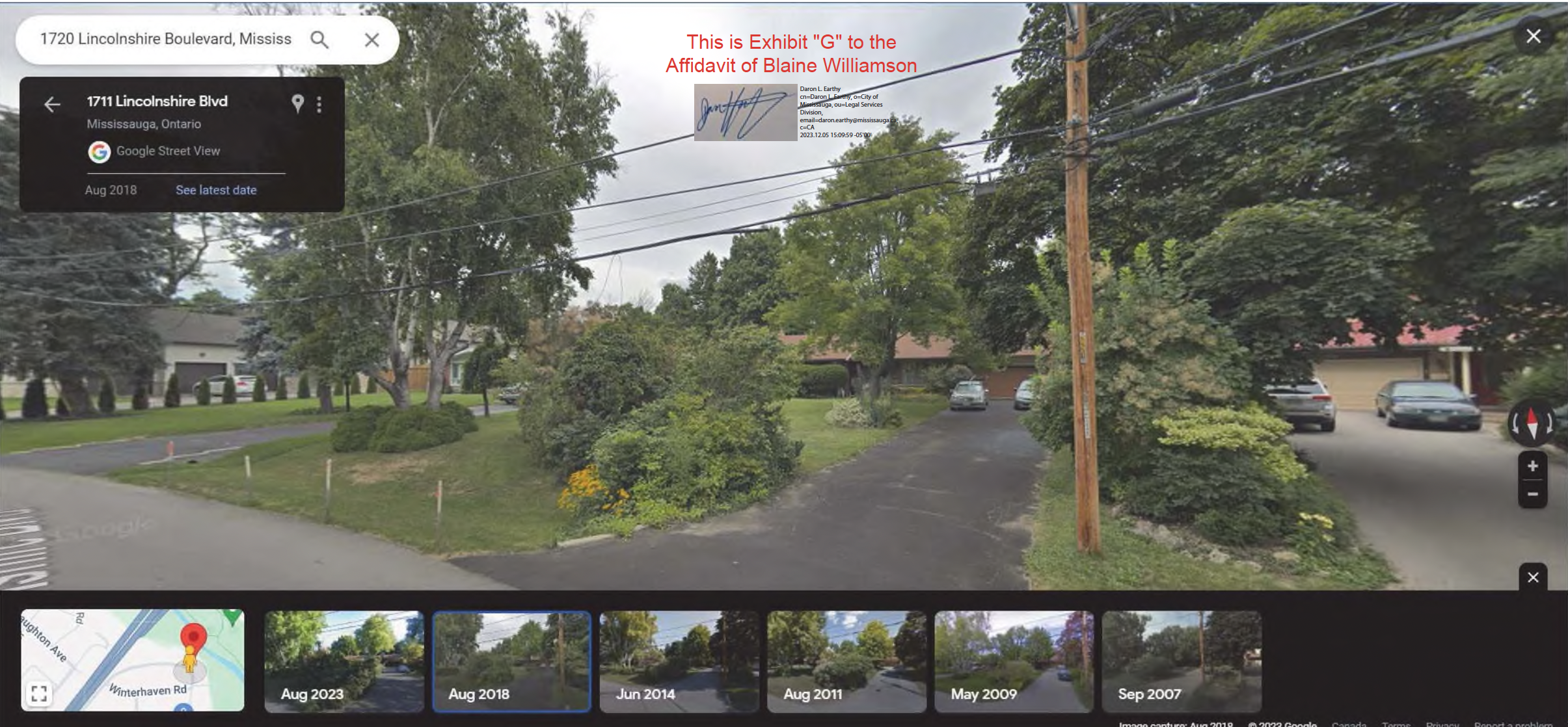
Wolf’s yard following the August 2023 mowing by City contractors. (Photos from Court documents)
Both the Bell case of 30 years ago and now the Ruck case have affirmed that naturalized gardening is a form of protected expression. Now it’s time for municipalities to take these Court decisions seriously and do the necessary—and in a time of climate crisis and biodiversity loss, urgent—work of reforming their outdated, anti-ecological and unconstitutional bylaws so that they support habitat gardens—a clear public good.
It’s ironic that pockets of public commentary on the Ruck win rage against Wolf Ruck’s “laziness” in not mowing his yard or weeding his plants. On the contrary, I’d say that, with some notable exceptions (Toronto, Kingston, and Dieppe NB, as a few examples), it’s municipalities across the country that have been lazy in not adhering to the Bell decision of more than 30 years ago.
But those days are over. The Ruck decision puts municipalities on notice. No longer can they claim not to be aware of the unconstitutional provisions contained in their property standards bylaws. Outdated, anti-ecological, unconstitutional bylaws must now be reformed in support of biodiversity and naturalized gardens, limited only by reasoned and reasonable evidence-based restrictions. That’s a win.